

AMBITION · personal finance · Money & wealth
Wealth Is What You Don’t Spend
The Salary Trap – A personal finance foundation for income earners.
Most personal finance conversations in T&T focus on what you earn. The harder, more useful question is what happens to it. There is a sentence about personal finance in Trinidad that stops most people in their tracks the first time they really sit with it.
“Wealth is not what you earn. It is what you keep.”
Read that again. Because if you grew up in Trinidad & Tobago, you probably spent your whole life watching it play out the other way. We celebrate income. We talk about who just got a big raise, who landed the new title, who bought the big vehicle. Rarely do we talk about who quietly built up six months of expenses in a high-yield savings account, or who systematically bought units in a mutual fund every payday for the past decade. Yet the second person, on average, ends up in a fundamentally different financial position from the first.
The numbers are worth looking at.
The average gross monthly salary in Trinidad and Tobago is approximately TT$9,500. Source: Central Statistical Office · 2024. Most people working full-time are earning a live able wage by Caribbean standards, not the crushing poverty picture some overseas readers may imagine.
So, the question is not really about income. It is about what happens to it.
Consumer credit in T&T has grown steadily. In 2024, consumer loans in the banking sector grew by 9.5%. Source: CBTT Financial Stability Report · 2024.
Of that increase, 16.4% was attributable to debt restructuring activities such as refinancing and consolidation, according to the same report. The CBTT identified rising household indebtedness as one of the domestic risks worth monitoring.
Credit itself is not the problem. A mortgage that builds equity, a business loan that generates income, a credit card used strategically and paid off monthly, these are legitimate financial tools. The issue emerges when credit is used to fund lifestyle rather than build assets, and the household stops being able to keep up.



Spent on foreign exchange
Of T&T foreign exchange sales above US$20,000 went to credit card transactions in 2024, the largest single category, ahead of retail and distribution (16.5%), energy companies (15.8%), and automobile dealers (5.8%).
SOURCE · CBTT Annual Economic Survey · 2024
The CBTT classifies credit card transactions in this category as personal consumption rather than productive investment. The figure means that a significant share of the foreign exchange the country secures is used to fund overseas consumer spending. Source: CBTT Annual Economic Survey · 2024.
What does the salary trap actually looks like?



Here is a scenario most people in T&T will recognize. A young professional lands a solid job, maybe in banking, the energy sector, or the public service. Good salary. Benefits. The family is proud. And within eighteen months, the lifestyle has quietly grown to match the paycheck.
Better car. Better apartment. Eating out regularly because that is what people at this level do. A wardrobe that fits the role. None of these things are wrong on their own. The pattern emerges when all of them arrive together and the paycheck absorbs them completely.
Before long, a person earning what most people in T&T would consider a comfortable salary is left with very little at the end of each month. Not because of any single reckless decision. Because their lifestyle expanded to meet thier income and that method kept going.
“Your income level does not make you wealthy. Your savings rate does.”
Two people, different incomes, can end up in very different positions depending on how they manage the gap.
Employee A
$15,000 / month
Earns $15,000. Consistently spends $14,500. One unexpected expense away from a stressful month. Often looks more successful from the outside.
Employee B
$8,000 / month
Earns $8,000. Puts aside $1,500 every month without fail. Building something that compounds quietly over time. More financially secure.
What is wealth actually?
Wealth is the gap between what you earn and what you spend. That gap, built up over time and put to work in the right places is what gives you options.
And options are really what this is about. Not to look successful. Not to keep up with anyone. Options!
- The option to leave a job that is draining you without panicking about rent.
- The option to help a family member in a tough moment without taking on debt you did not plan for.
- The option to say yes to opportunities that require capital, a business idea, a house deposit, a further degree.
- The option to retire on terms that reflect the life you actually want.
That kind of freedom comes from the gap, not the gross salary.



The T&T context is real.



In Trinidad and Tobago, our relationship with money is shaped by some genuinely good things. We are generous. We celebrate together. We look out for family. We show up for friends. We celebrate Carnival, weddings, christenings, back-to-school, Christmas, and we do it to the extreme. That community spirit is something to be proud of.
The pattern emerges when the pressure to show up financially outpaces what we actually set aside for it. When a celebration becomes a source of stress because the budget was not planned. When saying yes to every occasion means saying no to a savings goal at the end of the month. This is not about giving up the things you enjoy. Instead, it is about being the one who planned for them.
Credit access and the inflation reality
Access to credit has made all of this more layered. Credit cards, personal loans, buy-now-pay-later options, these products exist because they serve real needs. A credit card with travel benefits, paid off in full each month, is a genuinely useful financial tool. The tension emerges when the balance is not cleared, when interest starts to compound, when the tool becomes a trap.
With headline inflation averaging 0.5% in 2024. Source: CBTT Financial Stability Report · 2024 Money in a basic savings account broadly preserves nominal value but earns very little real return. Understanding what to do with cash beyond the emergency fund is one of the areas where a bit of financial learning pays for itself many times over.
The number nobody talks about.



Most people know roughly what they earn. Few people know their actual net worth.
Net worth is simple enough to calculate. Add up everything you own that has value, savings, investments, property, even the car. Then subtract everything you owe, the mortgage, the car loan, any credit card balance you are carrying, any personal debt. What is left is your net worth. It is the single number that tells you where you actually stand.
Some people who look successful from the outside, their net worth number maybe smaller than expected. The lifestyle is real, but so is what financed it.
Others who you might not notice at a party, their net worth number is quietly solid. Because at some point they decided that the gap between earning and spending was worth protecting, and they protected it consistently.
Wealth is built in those ordinary months. The decisions that nobody posts about, that do not make for a story at the fete, but that add up into something meaningful over five or ten years.
So, what do you actually do?


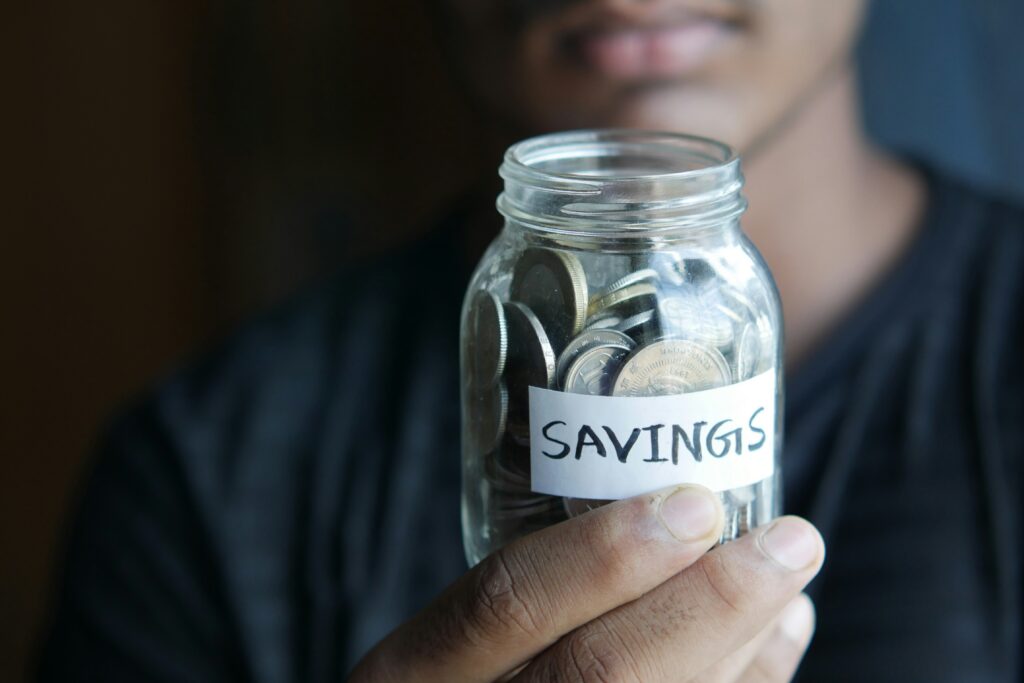
Nothing extreme. The goal is not to cut everything and live like a monk. It is to be deliberate.
A good starting point is one honest question: of everything I spent money on last month, how much of it genuinely added to my life in a way that lasted? The dinner with people you love, yes. The savings plan you finally started, absolutely. The credit card you used for the flight and paid off before interest hit, that is smart. The impulse purchases that added up to more than you realized, maybe not, that is where the awareness matters.
The difference between spending with intention and spending on autopilot can be surprisingly large when you actually look at it. Most people are not making bad decisions. They are just not making fully conscious ones.
A few options for consideration. Build an emergency fund of one to three months of expenses. Or open an investment account and put something small in it every month. Or track your spending for thirty days, properly, and see what the numbers actually show. Pick the one that feels most useful for where you are right now, and start there. None of these moves are dramatic. But they shift the direction if you are building wealth or building debt.
THE BOTTOM LINE
Three points to remember
The CBTT's monitoring of household borrowing levels in its 2024 Financial Stability Report is not cause for alarm. It is a reminder that the relationship between credit and savings is one worth getting right early rather than trying to unwind later.
Wealth is the gap.
Between what you earn and what you spend, not the size of the salary. The savings rate is the variable that determines financial security, regardless of income level.
Credit is a tool, not an income substitute.
A mortgage, a business loan, or a credit card paid in full each month is a legitimate financial instrument. Credit used to fund consumption ahead of income is the trap.
Net worth is the number that tells the truth.
Assets minus liabilities. Most people know what they earn. Few know what they keep.
WHERE AMBITION FITS
The people who end up with the most options are usually not the highest earners in the room. They are the ones who decided early that the gap between what they earn and what they spend was worth protecting and protected it consistently.
Every financial conversation Ambition will have on this platform starts from this foundation. Not because saving is the only thing that matters, but because it is where everything else becomes possible.
“Wealth is not what you earn. It is what you don’t spend.
That is where it starts!”
Caribbean financial education, every Tuesday.
Plain language. Sourced data. No investment advice. Unsubscribe any time.
Frequently Asked Questions (FAQs)
What is the salary trap?
The salary trap is the pattern where lifestyle expands to match a rising income, better car, better apartment, more eating out, wardrobe upgrades, leaving the earner with very little at the end of each month regardless of how much they make. It is not caused by one reckless decision. It emerges when income growth is fully absorbed by lifestyle inflation, especially in T&T’s culture of visible success.
What is the average salary in Trinidad and Tobago?
The average gross monthly salary in Trinidad and Tobago is approximately TT$9,500, according to the Central Statistical Office’s 2024 figures. Most people working full-time are earning a live-able wage by Caribbean standards.
What is wealth actually? Earning or Saving?
Wealth is not what you earn. It is what you keep. Specifically, wealth is the gap between what you earn and what you spend, built up over time and put to work. Two people with different incomes can end up in very different financial positions depending on how they manage that gap. A $8,000 monthly earner saving $1,500 monthly builds more security over time than a $15,000 monthly earner who spends $14,500 per month.
How do you calculate net worth?
Net worth is simple to calculate. Add up everything you own that has value, savings, investments, property, even the car. Then subtract everything you owe, the mortgage, car loan, credit card balances, personal loans. The number left is your net worth. It is the single figure that tells you where you actually stand financially.
What’s a good starting point for managing my personal finances?
Pick one of three:
- Build an emergency fund of one to three months of expenses.
- Open an investment account and put something small in it every month.
- Track your spending for thirty days and see what the numbers actually show.
The specific step matters less than picking one and starting. Consistency over five to ten years is what builds wealth.
SOURCES
- CSO · 2024 · Central Statistical Office of Trinidad and Tobago · Average monthly earnings · 2024
- CBTT AES · 2024 · CBTT Annual Economic Survey · 2024 · Foreign exchange sales by category
- CBTT FSR · 2024 · CBTT Financial Stability Report · 2024 · Consumer credit growth, household indebtedness, inflation
- CBTT MIRS · 2024 · CBTT Monthly Interest Rate Statistics · 2024 · Deposit rates
- Newsday · 2024 · Trinidad and Tobago Newsday · 2024 · Bank credit card foreign exchange limits

Assets vs. Liabilities
A personal finance framework for Trinidad and Tobago earners, how to spot assets, avoid liabilities, and build wealth over time.

Four Markets. One Pattern
How financial literacy is developing across Trinidad, Jamaica, Guyana, and Barbados. What Caribbean financial literacy data shows across four markets.

Ansa Mcal (AMCL) Stock Analysis Report 2025
ANSA McAL FY2025 stock analysis on the TTSE. Profit before tax crosses TT$1.01 billion for the first time; three-year dividend pause funds the 2X strategy.
This article is published by Ambition for informational and educational purposes only. It does not constitute financial, investment, or legal advice. Ambition reports facts, explains their meaning, and provides sourced context, it does not predict outcomes or recommend actions. Readers should consult licensed professionals before making any financial decisions. All statistics carry inline source attribution; readers are encouraged to verify primary sources independently.