
AMBITION · caribbean financial literacy · business & markets
Four Markets. One Pattern.
What the data shows about Caribbean financial literacy across four markets.
Across Trinidad and Tobago, Jamaica, Guyana, and Barbados, a clear pattern emerges from the published data on Caribbean financial literacy. Where sustained financial education investment exists, retail participation in financial markets follows. Where investment has been thinner or more recent, participation is still building. This is not opinion, it is what the data across four markets tells us.
Jamaica
2% → 10% of the population invested in equities over 10 years
SOURCE · JIS 2021
T&T
institutions coordinating under the NFLP since 2007
SOURCE · CBTT 2025
Guyana
Banks DIH shares: GY$80 → GY$301 (Jan 2021–Apr 2022)
SOURCE · EFMI 2023
barbados
appox. 100% of Bajans hold a savings or checking account
SOURCE · IDB 2020
A pattern that runs through the region
Financial literacy in the Caribbean is not a story of one country leading and others trailing. It is a story of four markets, each at a different point on the same curve, each working with different institutional starting points, but all moving in a recognizable direction.
The published data tells us something useful: the markets that have invested longest and most consistently in financial education show the strongest measurable participation outcomes. The markets that are earlier in their financial literacy investment show smaller but recognizable early signs. And the markets that are still building comparable data infrastructure themselves offer the most honest picture of how much work regional cooperation still has to do.
This article looks at what the available data shows about each of the four markets we cover. It is not a ranking. It is a snapshot of a regional pattern, and an honest acknowledgement that comparable, standardized financial literacy data across the four markets does not yet exist, which is itself part of the story.
“The data shows a pattern. Where sustained education investment exists, participation follows. The Caribbean has the institutions. The work is in connecting them to people.”
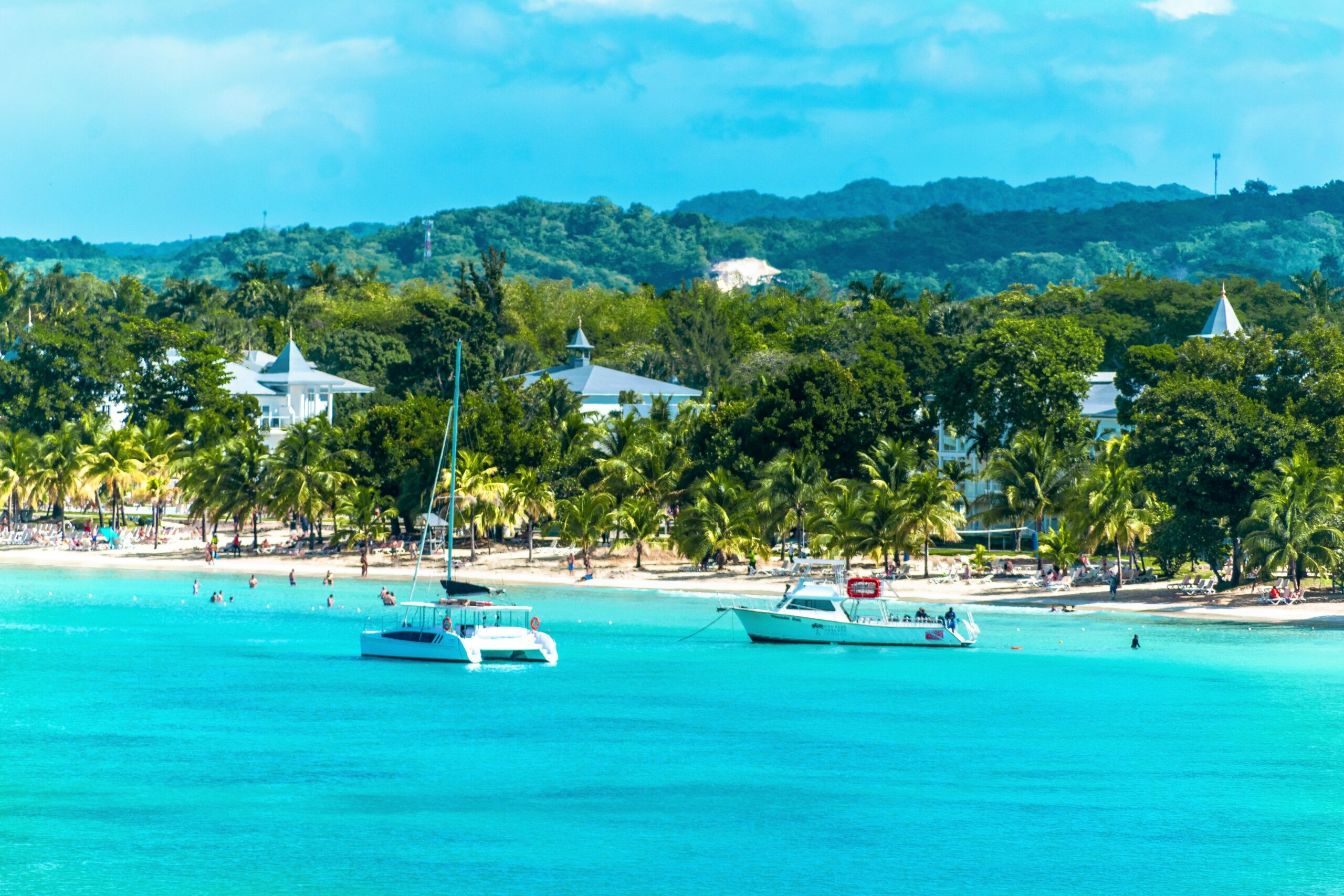
Jamaica — A generation of sustained education
The Jamaica Stock Exchange is the most thoroughly measured retail participation story in the region, and the numbers are striking. Jamaica’s investor base grew from approximately 2% of the population to 10% between 2011 and 2020. New investors in the market grew from 3,412 in 2015 to 48,128 in 2019, a fourteen-fold increase over four years. Source: Jamaica Information Service · 2021.
The infrastructure behind those numbers is worth naming. The JSE established its e-Campus in 2010 as a dedicated financial education institution, accredited as a tertiary institution by the University Council of Jamaica in 2013. The e-Campus offers Continuing Professional Development-certified courses, workshops, and school outreach programs. Source: JSE e-Campus · 2024.
The exchange runs a Stock Market Game tracking student portfolio performance in real time, with top-performing students encouraged to open brokerage accounts. A primary-school version of the programme extends the outreach to younger students. Source: Jamaica Information Service · 2025.
The JSE also operates the Caribbean Business Exchange, a 24-hour business news channel broadcasting to more than thirty countries across the region. Source: Jamaica Information Service · 2025.
The exchange itself has been recognised by Bloomberg as the world’s best-performing equities market in 2015, 2018, and 2019. Source: Bloomberg · 2019.
The lesson the Jamaican data offers the region is not ‘do what Jamaica did,’ it is that sustained, multi-channel, multi-decade investment in financial education shows up in retail participation numbers over time.


Trinidad & Tobago - Institutional Foundations

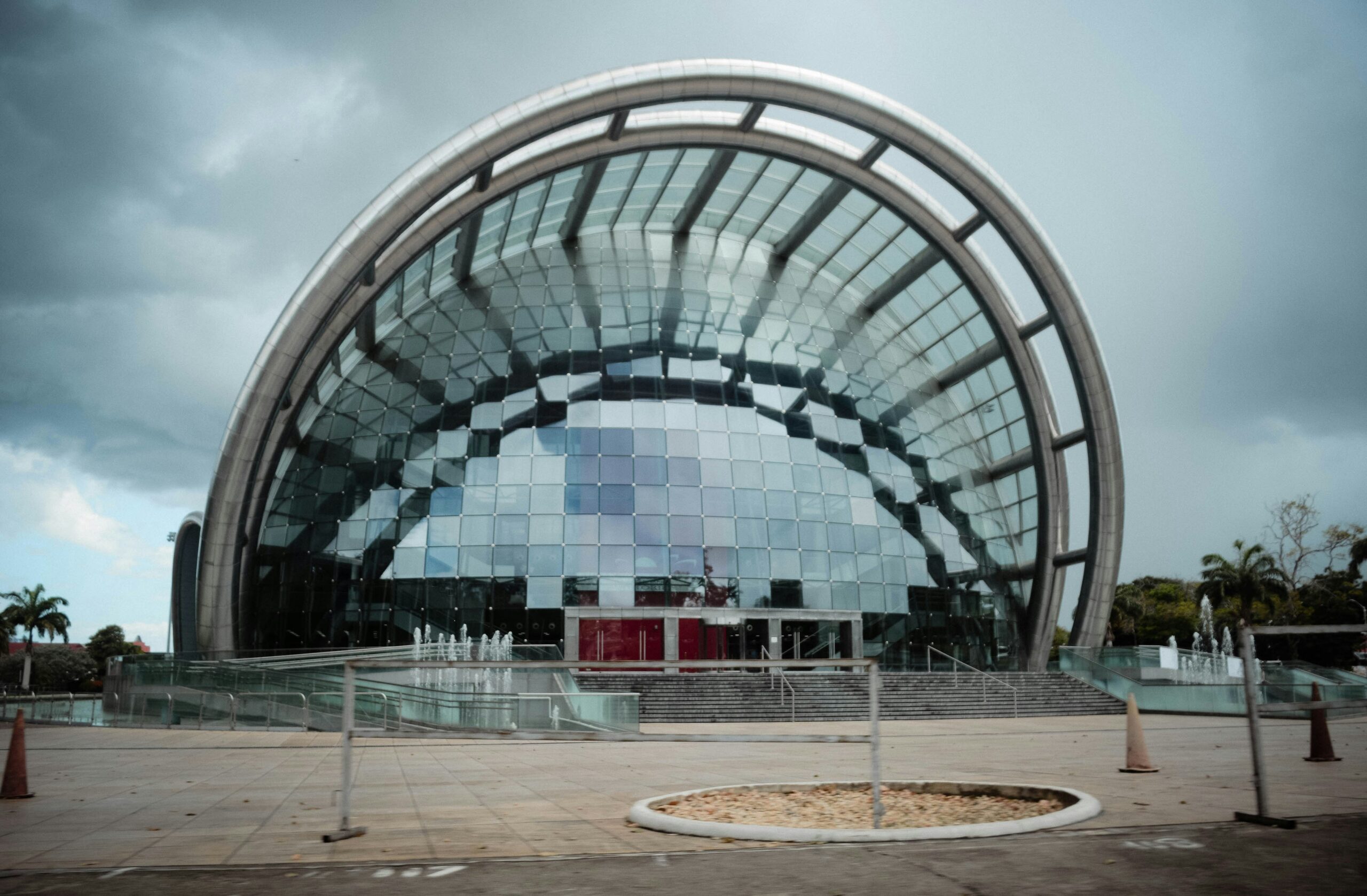



Trinidad and Tobago has invested in financial literacy for longer than most observers realise. The National Financial Literacy Programme (NFLP) was launched by the Central Bank of Trinidad and Tobago in January 2007, predating Jamaica’s e-Campus by three years.
The NFLP operates under a multi-stakeholder National Financial Education Committee that includes:-
- Central Bank of Trinidad & Tobago (CBTT),
- Trinidad and Tobago Stock Exchange (TTSE),
- Trinidad and Tobago Securities and Exchange Commission (TTSEC),
- Bankers Association,
- Association of Trinidad and Tobago Insurance Companies,
- Co-operative Credit Union League,
- Mutual Fund Association,
- Office of the Financial Services Ombudsman, and
- Ministry of Education,
- 16 institutions in total.
- Source: CBTT · 2025.
The coordination across institutions is genuine and unusual in the region. The inaugural FINLIT LIVE 2026 expo, held on 6–7 May 2026 at the Centre of Excellence in Macoya, reached over 2,300 people and involved 50-plus participating schools and dozens of exhibiting institutions. Source: CBTT FINLIT LIVE 2026 Press Release · May 2026.
The structural reality, though, is that T&T’s substantial national financial literacy investment has not concentrated on equity markets specifically. The TTSE supports the literacy effort as a partner but does not lead its own dedicated retail-investor education programme at the scale of the JSE’s e-Campus.
The Trinidad Express and Newsday have reported repeatedly on the gap in retail participation in the TTSE, including remarks by successive Ministers of Finance proposing the listing of major state assets which would materially expand the pool of listed instruments retail investors could participate in. Source: Trinidad Express · 2024; Trinidad Newsday · 2024.
What is working in T&T is the multi-stakeholder coordination model, sixteen institutions working together is the kind of infrastructure other markets are still trying to build. What is missing is a comparable retail-participation measurement framework of the kind Jamaica has, which would allow T&T’s literacy investment to be tracked against equity market participation outcomes.
Guyana - Opportunity moving faster than Infrastructure
Guyana presents a different version of the same regional question. The Guyana Stock Exchange, operated by the Guyana Association of Securities Companies and Intermediaries, began trading on 30 June 2003 with a Monday-only trading schedule. It currently lists 19 companies, of which 8 are actively traded. Source: GASCI · 2025.
The economic backdrop has shifted dramatically. Selected listed companies saw substantial price movements between January 2021 and April 2022: Banks DIH rose from GY$80 to GY$301, Demerara Distillers rose from GY$14 to GY$46, and Republic Bank (Guyana) rose from GY$300 to GY$465. Source: Emerging and Frontier Markets Intelligence · 2023.
The growth has been driven primarily by anticipated returns from the oil-and-gas economy. But the structural infrastructure has not kept pace. The United States Department of State noted in its 2024 investment climate report that Guyana has not listed a new company on the exchange in over a decade. Source: US Department of State · 2024 Investment Climate Report.
The data raises a regional question about how rapidly growing economies build the financial literacy infrastructure that supports broad participation in capital markets. This is one of the most important open questions the four Caribbean markets face together.
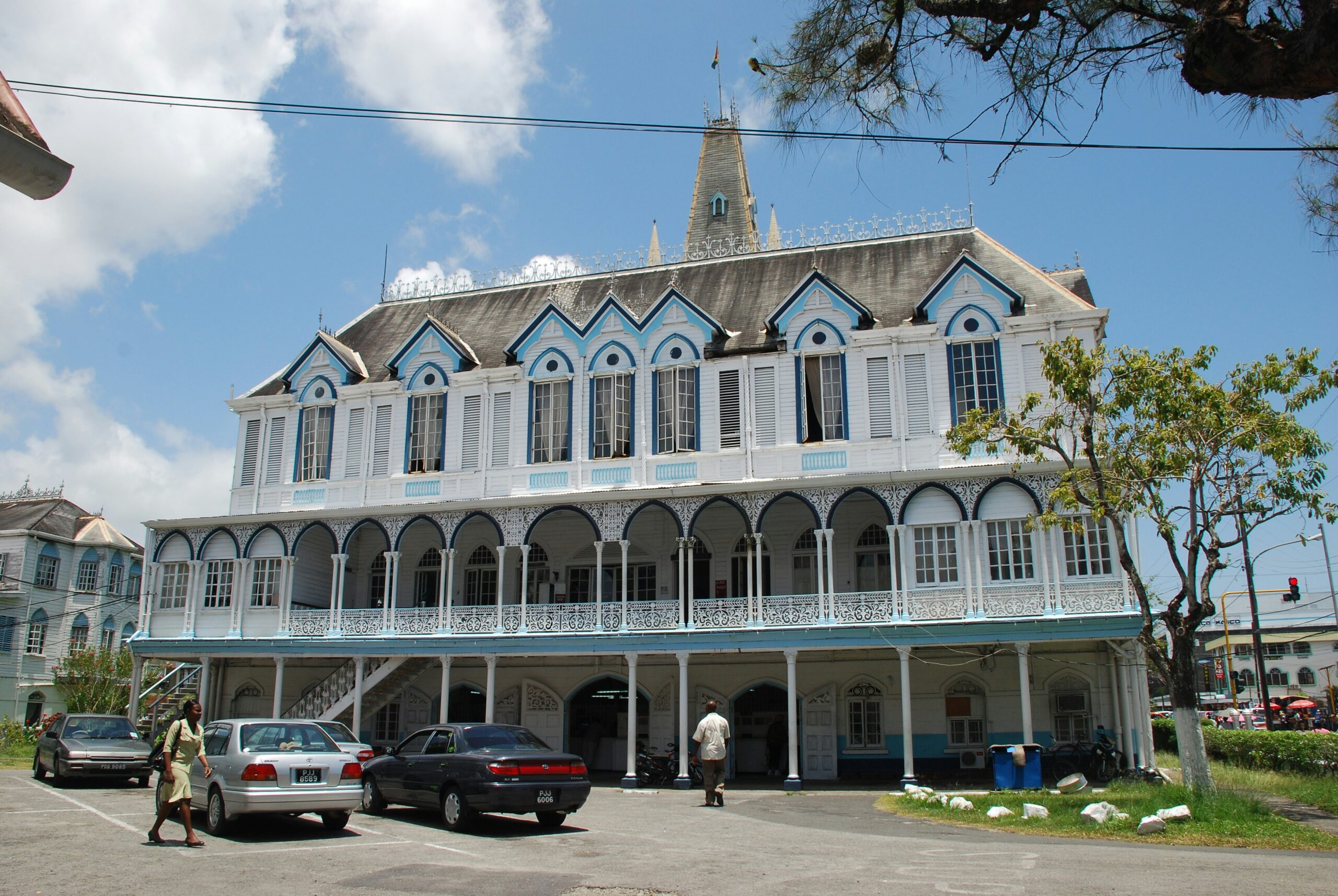


Barbados - Strong Access, Evolving Inclusion



Barbados sits in a different position again. By the most basic measure of financial inclusion, access to banking, Barbados is near-universal. An Inter-American Development Bank report found that almost 100% of Bajans hold a savings or checking account, based on 2016 and 2017 Central Bank data. Source: Inter-American Development Bank · 2020.
The depth and density of branch and ATM coverage is high by regional standards. What the data also shows, however, is that the next layer, financial market depth, has further to go. The ratio of private sector credit to GDP in Barbados sat at approximately 80% in 2019, a figure the IDB characterizes as reflecting improving financial inclusion but a market that is still building institutional depth. Source: Inter-American Development Bank · 2021.
The IDB has explicitly recommended that Barbados develop a financial inclusion strategy with a strong financial education component focused on at-risk populations and young adults. Source: IDB · 2020.
Barbados has the access foundations many Caribbean countries are still building toward. The challenge is moving from access to engagement, from owning a bank account to participating meaningfully in the financial system across savings, insurance, and investment products.
THE BOTTOM LINE · 3 POINTS TO REMEMBER
What the four markets show about Caribbean Financial Literacy
Read across all four, three patterns emerge clearly.
What is working across the region
Multi-stakeholder coordination matters, Jamaica and T&T both demonstrate that financial education is strongest when central banks, regulators, exchanges, banks, insurance regulators, and educational institutions work together in structured coordination. Long-term, sustained programming matters more than one-off events, the JSE’s e-Campus is fifteen years old; T&T’s NFLP is eighteen. And the Jamaican data confirms that measurable retail participation growth follows sustained investment, given enough time.
What is missing across the region
Standardized, comparable financial literacy data across the four markets does not yet exist. This makes it harder for regulators, policymakers, and the media to track progress or benchmark investments. It also makes it harder for readers to understand where they are on a regional curve. Building comparable measurement is one of the highest-leverage regional infrastructure investments still ahead.
What the work ahead looks like
What the work ahead looks like. Building financial literacy in the Caribbean is not the work of any one institution. It requires central banks, securities regulators, stock exchanges, commercial banks, insurance regulators, universities, secondary schools, and a media layer that translates the work of every other player into language that reaches non-specialist readers. That last layer — the media layer — has been underbuilt across the region relative to the institutional layer. That is the gap Ambition exists to close.
WHERE AMBITION FITS
Ambition exists because the data above describes a real gap and because the media layer of the financial literacy ecosystem in the Caribbean has been underbuilt relative to the institutional layer.
Central banks publish. Exchanges teach. Regulators enforce standards. But the work of translating financial information into language that meets people where they are, the daily, accessible, plain-language layer that connects institutional work to the citizens the institutions serve, has been the missing piece.
We are not an institution. We are not a regulator. We are a Caribbean financial education platform built to do one specific thing: translate the work of every other player in the system into language a working professional, a first-time investor, an entrepreneur, or a student can actually use.
This is what we are building. This is why we are building it. And this is who it is for, anyone in the region with an ambitious goal and a need for financial information they can actually use.
Caribbean financial education, every Tuesday.
Plain language. Sourced data. No investment advice. Unsubscribe any time.
Frequently Asked Questions (FAQs)
What is the state of Caribbean financial literacy in 2026?
Caribbean financial literacy varies significantly across the four main markets. Jamaica has the most measured retail investor participation growth (from 2% to 10% of population 2011–2020) following a decade-plus investment in JSE e-Campus and school outreach. Trinidad and Tobago has sixteen institutions coordinating under the NFLP since 2007. Guyana’s stock exchange has grown rapidly on oil-driven demand but has not listed a new company in over a decade. Barbados has near-universal banking access but market depth is still developing.
How large is retail investor participation in the Jamaica Stock Exchange?
Between 2011 and 2020, Jamaica’s investor base grew from approximately 2% of the population to 10%. New investors in the market grew from 3,412 in 2015 to 48,128 in 2019, a fourteen-fold increase over four years. Source: Jamaica Information Service · 2021.
What is the NFLP in Trinidad and Tobago?
The National Financial Literacy Programme (NFLP) was launched by the Central Bank of Trinidad and Tobago in January 2007. It operates under a multi-stakeholder National Financial Education Committee that includes the CBTT, the TTSE, the Trinidad and Tobago Securities and Exchange Commission, commercial banks, insurance regulators, and educational institutions, sixteen institutions in total.
When did the Guyana Stock Exchange begin trading?
The Guyana Stock Exchange, operated by the Guyana Association of Securities Companies and Intermediaries, began trading on 30 June 2003 with a Monday-only trading schedule. It currently lists 19 companies, of which 8 are actively traded. Source: GASCI · 2025.
What is Ambition’s role in Caribbean financial literacy?
Ambition is the Caribbean’s financial education platform. It translates the work of central banks, exchanges, regulators, and financial institutions into plain-language content for working professionals, first-time investors, entrepreneurs, and students across Trinidad and Tobago, Jamaica, Guyana, Barbados, and the wider Caribbean.
SOURCES
- Jamaica Information Service · 2021 — Jamaica investor base growth from 2% to 10% of population; new investors 3,412 (2015) to 48,128 (2019).
- JSE e-Campus · 2024 — Established 2010, UCJ-accredited 2013, CPD-certified courses.
- Jamaica Information Service · 2025 — JSE Stock Market Game; Caribbean Business Exchange 24-hour news channel.
- Bloomberg · 2019 — JSE named world’s best-performing equities market 2015, 2018, 2019.
- CBTT · 2025 NFLP launched January 2007; 16-institution National Financial Education Committee. CBTT · 2025
- CBTT · May 2026 FINLIT LIVE 2026 expo reached 2,300+ people, 50+ schools, 6–7 May 2026 at Centre of Excellence, Macoya. CBTT FINLIT LIVE 2026 Press Release · May 2026
- Trinidad Express · Trinidad Newsday 2024 · TTSE retail participation gap; Ministers’ proposals on state-asset listings.
- GASCI · 2025 Guyana Stock Exchange founding (June 2003); 19 listed companies, 8 actively traded; weekly Monday trading.
- EFMI · 2023 Guyana listed company share price movements Jan 2021–Apr 2022. Emerging and Frontier Markets Intelligence · 2023
- US State Dept · 2024 Guyana has not listed a new company in over a decade. US Department of State · 2024 Investment Climate Report
- IDB · 2020 ~100% Bajan banking inclusion (2016/17); financial inclusion strategy recommendation. Inter-American Development Bank · 2020
- IDB · 2021 Barbados private sector credit-to-GDP ratio (80% in 2019). Inter-American Development Bank · 2021
This article is published by Ambition for informational and educational purposes only. It does not constitute financial, investment, or legal advice. Ambition reports facts, explains their meaning, and provides sourced context, it does not predict outcomes or recommend actions. Readers should consult licensed professionals before making any financial decisions. All statistics carry inline source attribution; readers are encouraged to verify primary sources independently.