How Does the Economy Actually Work?
AMBITION | Business & Markets | Financial Literacy Series
The economy is one of those words that gets thrown around constantly but rarely gets explained properly. Politicians talk about it in speeches. Analysts debate it on television. The fruits & vegetable vendors always have strong opinions about it every weekend. But for most people, the actual mechanics of how an economy works remain a bit of a mystery and that is a problem.
The economy shapes your salary, the price of groceries, whether the bank approves your loan, whether your job is secure, and what your savings are worth five years from now. Understanding it, even at a basic level, makes you a sharper decision-maker in every part of your financial life.
So, here is a plain-language explanation of how an economy works, with Trinidad and Tobago as the example.
The Basic Idea
An economy is simply the system through which a society produces, distributes, and consumes goods and services. Every time someone earns money, spends money, saves money, or borrows money, they are participating in the economy. It is not a building or an institution. It is the sum total of millions of individual transactions happening every single day.
Think about what happens when you buy a roti from a shop in Curepe. You hand over your money. The shop owner uses some of it to pay their staff, some to buy flour and ingredients from a supplier, some to pay their rent to a landlord, some to pay utilities. Each of those recipients then spends their money on something else. That money keeps moving, each transaction feeding another. This circulation of money through the system is, at its most basic, what an economy is.
Economists call this “the Circular Flow.” Money flows from households to businesses as spending. It flows back from businesses to households as wages and salaries. The Government collect taxes from both and use that money to provide services, build roads, pay civil servants, and fund social programs. Financial institutions like Republic Bank and First Citizens sit in the middle of all this, collecting deposits from people who are saving and lending money to people and businesses who need it to grow.
Supply, Demand, and Prices
The price of almost everything you buy is determined by the relationship between supply and demand. When a lot of people want something and there is not much of it available, the price goes up. When there is more of something than people want, the price comes down.
This plays out constantly in ways we recognize. During a hurricane warning, the price of water and canned goods effectively rises because demand spikes and supply stays fixed. When a bumper harvest of fruits & vegetables hits the markets, the price falls because supply is plentiful. When oil prices rise globally, it eventually shows up in everything from fuel costs to the price of imported goods, because transport and production costs are embedded in almost everything we consume.
Understanding this relationship helps you make smarter decisions, both as a consumer and as someone thinking about where economic opportunities might lie.
The Role of the Government
In most economies, including ours, the government plays a significant role in shaping economic conditions. It does this through two main tools.
The first is fiscal policy, which is essentially decisions about spending and taxation. When the government spends heavily on infrastructure or social programs, it injects money into the economy, which stimulates activity. When it raises taxes, it pulls money out, which can slow things down. The annual national budget, presented each year, is the government’s main statement of its fiscal intentions.
The second is monetary policy, which in Trinidad and Tobago is managed by the Central Bank. The Central Bank sets interest rates and controls the money supply. When it wants to encourage borrowing and spending, it keeps interest rates low. When it wants to cool an overheating economy or manage inflation, it raises them. The rates that commercial banks like RBC and FCB offer on loans and savings accounts are directly influenced by the Central Bank’s decisions.
Inflation: Why Your Dollar Buys Less Over Time
Inflation is the gradual increase in the price of goods and services over time. A bag of groceries that cost $200 five years ago might cost $260 today. That difference is inflation at work.
A small, steady amount of inflation is actually considered healthy in a functioning economy because it encourages people to spend and invest rather than sit on cash that is slowly losing value. The problem is when inflation runs too high, which erodes purchasing power, hits lower-income households hardest, and creates instability.
For you personally, inflation means that money sitting in a low-interest account is effectively losing value every year. This is one of the core reasons why investing, rather than just saving, matters over the long term.
Economic Cycles: Boom and Bust
Economies do not grow in a straight line. They move in cycles of expansion and contraction. During an expansion, businesses grow, employment rises, incomes improve, and confidence is high. During a contraction or recession, the reverse happens: businesses slow down, unemployment rises, and people tighten their spending, which causes businesses to slow further. It becomes a feedback loop in both directions.
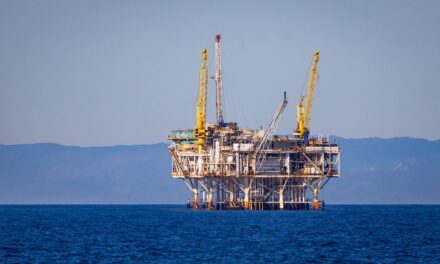
Trinidad and Tobago has lived through several of these cycles, most of them tied closely to the price of oil and gas. The boom years of the 2000s, when energy revenues were strong, it funded significant public spending and drove broad economic activity. The contraction that followed when prices dropped in 2014 and beyond was felt across virtually every sector. Companies scaled back. The government tightened expenditure. Businesses that had expanded aggressively found themselves overexposed.
Understanding where you are in an economic cycle helps you make smarter decisions about when to take risks, when to be cautious, and when to build your reserves.
Why This All Matters to You
You do not need to become an economist. But having a working understanding of how these forces interact gives you an enormous advantage in your personal financial decisions.
When interest rates are rising, it might not be the best time to take on new debt. When inflation is high, the urgency of investing your savings somewhere they can earn a real return increase. When the economy is contracting, building your emergency fund becomes a higher priority than chasing growth. When energy revenues are strong and the government is spending, there may be opportunities in sectors that benefit from that activity.
Every major financial decision you make, borrowing, saving, investing, starting a business, changing careers, happens inside an economic context. The better you understand that context, the better your decisions are likely to be. And in a small, open economy like ours, where global oil prices can change the mood of the entire country, it is especially worth paying attention to.
This article is part of Ambition’s Financial Learning Path series, designed to help people in Trinidad and Tobago build real financial literacy from the ground up. It is educational content, not personalized financial advice.