
What Industries Make Up Our Economy?
AMBITION | Business & Markets | Financial Literacy Series
If someone asked you right now what drives the Trinidad and Tobago economy, most people would say oil and gas. And they would not be wrong. But the full picture is more layered than that, and understanding it matters more than most people realize.
Knowing which industries power this country tells you where the jobs are, where the investment opportunities lie, which sectors are growing and which are under pressure, and where the next wave of economic activity is likely to come from. That is useful information whether you are an employee, a business owner, an investor, or just someone trying to make smart decisions about your career and your money.
Here is a sector-by-sector breakdown of what actually makes up the T&T economy.
Energy: The Engine That Drives Everything Else
Let us start with the obvious one. The energy sector, oil, natural gas, and the downstream industries that process those resources, is the dominant force in the Trinidad and Tobago economy. It accounts for the vast majority of government revenue and export earnings, and its performance ripples through every other sector.
At our peak around 2009 and 2010, Trinidad was producing over four billion cubic feet of natural gas per day. That figure has since declined to roughly half that level, and the industry has been grappling with the challenge of finding new reserves to reverse the decline. Companies like Shell, and BPTT operate major offshore fields, while the National Gas Company and Petrotrin’s successor, Heritage Petroleum, represent the state’s interests in the sector.
Downstream from the gas fields, Point Lisas Industrial Estate is home to one of the most concentrated clusters of energy-based manufacturing in the Western Hemisphere, producing ammonia, methanol, steel, and fertilizers for export. These industries employ thousands directly and support tens of thousands of jobs indirectly.
The health of the energy sector flows directly into government revenues, which in turn affect public sector wages, infrastructure spending, and social programs. When energy is strong, the whole economy tends to feel it. When it struggles, the effects spread quickly.
Financial Services: The Backbone of Commerce
The financial services sector is one of the most developed in the Caribbean region and plays a critical role in enabling economic activity across every other industry.
Commercial banks like Republic Bank, First Citizens, and RBC Royal Bank provide the lending that allows businesses to invest and grow, and the deposit facilities that allow individuals to save and manage their money. The sector also includes investment houses and merchant banks such as Ansa Merchant Bank and the Unit Trust Corporation, which channel savings into productive investments across the region.
Insurance is another significant pillar. Institutions like Guardian Group, Sagicor, and Maritime Financial manage enormous pools of capital on behalf of policyholders and pension funds, making them some of the largest institutional investors in the region. When these entities deploy capital into local companies, infrastructure, or government bonds, they are doing more than just managing risk. They are funding the economy.
The Trinidad and Tobago Stock Exchange (TTSE), while relatively small by global standards, provides a mechanism for companies to raise capital and for ordinary investors to participate in the growth of local businesses. Brokerage firms like Bourse Securities and West Indies Stockbrokers (WISE) make that market accessible.
Manufacturing and Conglomerates: The Quiet Backbone
Trinidad has a manufacturing base that is genuinely significant for a country of our size. We produce food and beverages, construction materials, chemicals, packaging, and a range of consumer goods that are distributed across the Caribbean.
Much of this activity is anchored by the large diversified conglomerates that have shaped the local business landscape for generations. ANSA McAL operates across manufacturing, financial services, media, retail, and distribution, with a footprint that extends well beyond Trinidad. Massy Group similarly spans energy services, retail, financial services, and technology across the region. Agostini’s Limited covers pharmaceutical distribution, consumer goods, and industrial products.
These groups are significant employers, significant taxpayers, and significant investors. Their performance is a reasonable proxy for the health of the broader private sector economy.
Retail and Distribution: Where Most People Work
The retail and distribution sector may not generate the headlines that energy does, but it employs more Trinidadians than any other sector. Supermarkets, hardware stores, car dealerships, food service businesses, clothing retailers, and the vast informal economy of small traders and vendors all sit within this broad category.
This sector is sensitive to consumer confidence and disposable income. When energy revenues drop and government spending contracts, it shows up here first. People spend less, retailers feel it, and the small business community, which has almost no financial buffer, feels it most acutely.
Construction and Real Estate
Construction tends to be closely tied to government spending cycles. When capital budgets are healthy, infrastructure projects and public buildings generate significant activity. The private real estate market, driven by residential demand and commercial development, adds another layer.
Real estate in Trinidad is also a significant personal investment vehicle for the middle class. Many families have built wealth through property over generations, and the sector remains one of the primary ways ordinary people think about long-term asset building.
Tourism: The Underperforming Opportunity
Relative to many Caribbean neighbors, Trinidad has historically underinvested in tourism. Our carnival is world-class. Our food culture is exceptional. Our biodiversity, particularly in Tobago, is genuinely remarkable. And yet tourism has never become the economic pillar here that it is in Barbados, Saint Lucia, or Jamaica.
Tobago in particular represents a significant opportunity that has been discussed for years without fully materializing. Recent developments, including renewed international hotel interest in the island, suggest some momentum is building, but the sector remains well below its potential contribution to the overall economy.
Agriculture: Small but Strategically Important
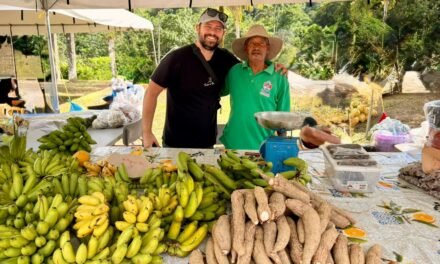
Agriculture represents a small share of GDP but carries an outsized strategic importance. In a country that imports the vast majority of its food, the vulnerability this creates is significant. Every time the exchange rate shifts or global food prices spike, it shows up directly on dinner tables across Trinidad.
There are genuine opportunities in agricultural development that remain largely untapped, both for domestic food security and for export to regional markets. The challenge has always been investment, infrastructure, and the availability of labour willing to work the land.
Why This Matters for Your Financial Decisions
Understanding the structure of our economy is not just academic. It has direct practical implications.
If you are choosing a career, knowing which sectors are growing and which are contracting helps you make a more informed choice. If you are investing, understanding which industries are exposed to which risks tell you something about the companies you are evaluating. If you are starting a business, knowing where the spending power in the economy is concentrated helps you identify viable markets.
Trinidad and Tobago is at a genuine crossroads. The energy sector that built this country is in a period of structural transition. The diversification that policymakers have talked about for decades is now a genuine economic necessity rather than just an aspiration. The opportunities that come with that transition, in financial services, in technology, in tourism, in agriculture, in creative industries, are real.
The people who understand the landscape are the ones best positioned to navigate it.
This article is part of Ambition’s Financial Learning Path series, designed to help people in Trinidad and Tobago build real financial literacy from the ground up. It is educational content, not personalized financial advice.