

Wealth Is What You Don't Spend
The Salary Trap
Most money conversations in Trinidad and Tobago are about what you earn. This one is about what happens to it.
Category
Money & Wealth
Type
Educational
Reading time
9 MIN
Author
Ambition
Updated
October 2026
QUICK ANSWER
The salary trap is a personal finance pattern found in Trinidad and Tobago and everywhere else: spending rises to meet every increase in income, a better car, a bigger apartment, more eating out so little is left at the end of each month.
Wealth is the gap between what you earn and what you keep. Someone earning $8,000 a month and setting aside $1,500 has $18,000 after a year. Someone earning $15,000 and keeping $500 has $6,000. Ambition calculation
Figures are in Trinidad and Tobago dollars unless marked US$.
Wealth is not what you earn. It is what you keep.
Read that again. If you grew up here, you have probably watched it play out the other way. We celebrate income. We talk about who just got a big raise, who landed the new title, who bought the big vehicle. Rarely do we talk about who quietly built up six months of expenses in a savings account, or who bought units in a mutual fund every payday for the past decade.
Yet the second habit adds up. $1,500 set aside every month is $18,000 after one year and $180,000 after ten, before any interest. Ambition calculation
What the Numbers Show
Most money conversations start with income: what the job pays, what the raise was, what the next title brings. The question here is what happens to that income once it lands.
One part of the answer is credit. Consumer loans from the banking sector grew 9.5% in 2024, and 16.4% of that growth came from debt restructuring, refinancing and consolidating loans already owed. In the same report, the Central Bank of Trinidad and Tobago (CBTT) wrote that rising household indebtedness had “re-emerged as a notable risk”. Source: CBTT · 2025
Borrowing kept growing after that. By July 2026, consumer lending was 4.3% higher than a year earlier. Source: CBTT · 2026
Credit itself is not the problem. A mortgage that builds equity (the share of the home you own outright), a business loan that earns income, a credit card paid off in full each month, each pays for something, or costs nothing in interest. The pressure builds when credit pays for a lifestyle the income has not caught up with. Assets vs Liabilities sorts debts by what they pay for.



Large foreign exchange sales to the public · 2025
44.6%
of foreign exchange sold to the public in transactions above US$20,000 went to credit cards in 2025, the largest single category, ahead of retail and distribution (20.2%), energy companies (10.6%) and automobile companies (5.7%).
Source: CBTT · 2026
That is about US$45 of every US$100. Source: CBTT · 2026; Ambition calculation In the first four months of 2026, the share was 38.8%. Source: CBTT · 2026 The credit card category is card spending in other currencies, which the banks behind the cards settle in foreign currency i.e. online orders, travel, subscriptions billed abroad.
What the Salary Trap Looks Like


Here is a scenario that may sound familiar. A young professional lands a steady job in banking, the energy sector or the public service. Good salary. Benefits. The family is proud. Within eighteen months, the lifestyle has quietly grown to match the salary.
Better car. Better apartment. Eating out regularly, because that is what people at this level do. A wardrobe that fits the role. None of these things is wrong on its own. The pattern starts when they all arrive together and the salary absorbs them completely.
Before long, a salary that once felt like plenty leaves very little at the end of each month. Not because of any single reckless decision. Because the lifestyle expanded to meet the income and kept going.
The salary sets what comes in. The gap sets what stays.
Two people, different incomes, can end up in very different positions depending on how they manage that gap.
Employee A
$15,000 a month
Earns $15,000. Spends $14,500. Keeps $500 a month, $6,000 after 12 months. One unexpected bill away from a stressful month. Often looks more successful from the outside. Ambition calculation
Employee B
$8,000 a month
Earns $8,000. Sets aside $1,500 every month. $18,000 after 12 months, before any interest. Looks ordinary from the outside. Ambition calculation
Which of the two months looks more like yours?
What Wealth Actually Is
Wealth is the gap between what you earn and what you spend. That gap, built up over time and put to work, is what gives you options. Not to look successful. Not to keep up with anyone. Options.
That kind of freedom comes from the gap, not the gross salary.



The T&T Context



Here, our relationship with money is shaped by some genuinely good things. We are generous. We celebrate together. We look out for family. We show up for friends. Carnival, with its fetes, weddings, christenings, back-to-school, Christmas: we celebrate them all, and we celebrate them to the fullest. None of that is the problem.
The pressure builds when showing up financially outpaces what was set aside for it. When a celebration becomes a source of stress because it was not in the budget. When saying yes to every occasion means saying no to a savings goal at the end of the month. This is not about giving up the things you enjoy. It is about being the one who planned for them.
Credit, prices and savings. Access to credit has made all of this more layered. Credit cards, personal loans and buy-now-pay-later plans serve real needs. A card with travel benefits, paid off in full each month, costs nothing in interest. The cost starts when the balance is carried. At the card rates published here, 24% to 28.99% a year, a $1,000 balance carried for a year costs about $240 to $290. Source: Republic Bank · 2026; Scotiabank T&T · 2024; Ambition calculation Banks here also offer instalment plans that turn a card balance into fixed monthly payments.
Savings move more slowly. Over the year to July 2026, prices rose 0.6%, about $6 on every $1,000 of spending, while banks paid an average of 0.92% a year on deposits in June 2026, about $9 on every $1,000. Money in a savings account keeps pace with prices and grows about $3 beyond them for every $1,000. Source: CBTT · 2026; Ambition calculation
What happens to money beyond an emergency fund is a separate question. What a TT$10,000 Emergency Fund Looks Like on Any Salary shows what the first $10,000 covers and how long it takes to build.
The Number Nobody Talks About
You probably know roughly what you earn. Do you know your net worth?
Net worth is everything you own that has value i.e. savings, investments, property, even the car, minus everything you owe: the mortgage, the car loan, any credit card balance you are carrying, any personal loan. What is left is one number, and it shows where you stand. Assets vs Liabilities works through a full example.
Your own version: $____ owned − $____ owed = $____.
For some people who look successful from the outside, that number is smaller than their lifestyle suggests. The lifestyle is real, but so is what financed it.
For others you might not notice at a fete, the number is larger than their lifestyle suggests. At some point they decided the gap between earning and spending was worth protecting, and they protected it month after month.
That is built in ordinary months. The decisions nobody posts about, that do not make a story at the fete, but that add up over five or ten years.



From Ambition · Free Tool
Personal Financial Health Scorecard
A 12-question assessment producing a financial health rating and the areas to review first · any currency
So, Where Does That Leave You?
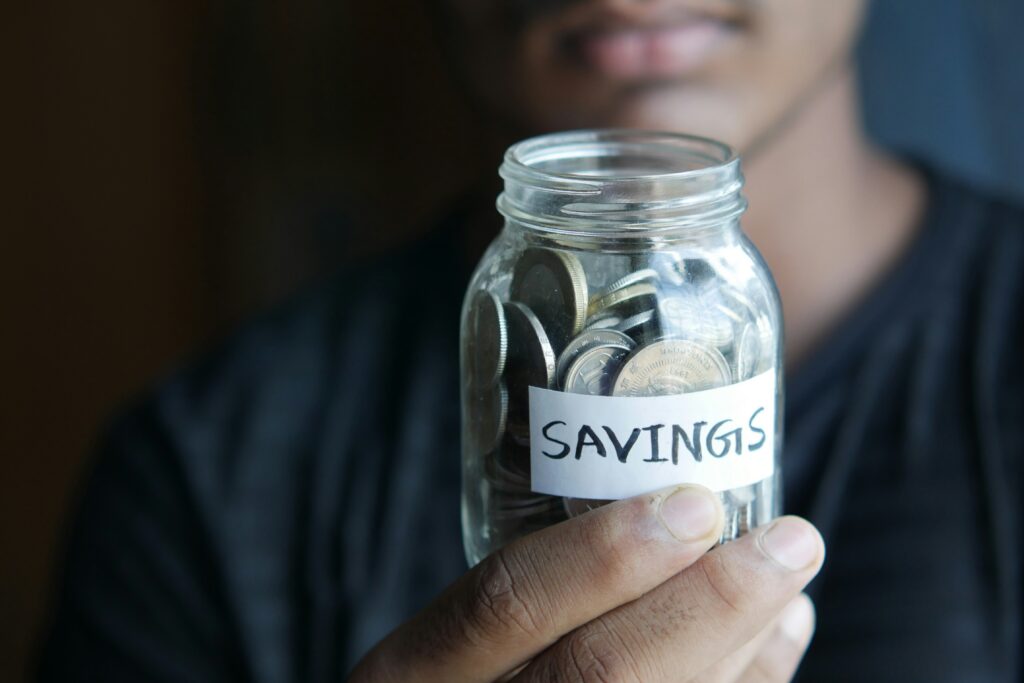

Nothing extreme. This is not about cutting everything and living like a monk. It is about seeing where the money went.
One honest question: of everything you spent money on last month, how much of it added to your life in a way that lasted? The dinner with people you love. The savings plan you finally started. The flight paid on a card and cleared before any interest. The small purchases that added up to more than expected. Only you can sort them.
Spending with intention and spending on autopilot can look the same on a bank statement. The difference is whether a choice was made. Many of these are not bad decisions. They are just not fully conscious ones.
Wealth is not what you earn. It is what you don’t spend. That is where it starts.
The Bottom Line — Three Points to Remember
Three points to carry away:
Wealth is the gap.
Between what you earn and what you keep, not the size of the salary. Employee B, on $8,000, sets aside $1,500 a month, i.e. $18,000 after a year. Employee A, on $15,000, keeps $500, i.e. $6,000 after a year. Ambition calculation
Credit is a tool, not an income substitute.
A mortgage, a business loan or a card paid in full each month pays for something or costs nothing in interest. A card balance carried for a year at 24%–28.99% costs about $240–$290 for every $1,000. Source: Republic Bank · 2026; Scotiabank T&T · 2024; Ambition calculation
Net worth is the number that tells the truth.
Assets minus liabilities. You probably know what you earn. Do you know what you keep?
your next move
One question to sit with: if you earned $2,000 more next month, where would it go?
A few options for consideration: an emergency fund of one to three months of expenses; an investment account with something small going into it every month; or thirty days of tracking spending to see what the numbers show.
Next in this series: Assets vs Liabilities: The Framework Behind Every Money Decision — what puts money into your pocket, what takes it out, and how to add it all up into one number.
Every week at caribbeanambition.com, Ambition explains what is happening with your money and what it means for you. Subscribe for the weekly brief and get the next article directly in your inbox.
Subscribe free at caribbeanambition.com.
Caribbean business, finance, and wealth — translated. Every Tuesday. Sourced data. No investment advice. Unsubscribe any time.
Frequently Asked Questions (FAQs)
What is the salary trap?
The salary trap is the pattern where spending rises to match a rising income — a better car, a bigger apartment, more eating out — leaving little at the end of each month however large the salary is. It rarely comes from one reckless decision. It comes from each increase in income being absorbed by the lifestyle.
How much does saving TT$1,500 a month add up to?
$18,000 after one year and $180,000 after ten years, before any interest. Someone earning $15,000 a month and keeping $500 has $6,000 after a year. Source: Ambition calculation
Is wealth about earning or saving in Trinidad and Tobago?
Wealth is the gap between what you earn and what you spend, built up over time. Two people with different incomes can end up in very different positions depending on that gap: an $8,000 earner setting aside $1,500 a month has $18,000 after a year; a $15,000 earner keeping $500 has $6,000. Source: Ambition calculation
How do you calculate net worth?
It is everything you own that has value — savings, investments, property, even the car — minus everything you owe: the mortgage, car loan, credit card balances and personal loans. Assets vs Liabilities on caribbeanambition.com works through a full example.
Where do people start with personal finance?
A few options for consideration: an emergency fund of one to three months of expenses; an investment account with something small going into it every month; or thirty days of tracking spending to see what the numbers show.
SOURCES
| CBTT · 2026 | Central Bank of Trinidad and Tobago. Annual Economic Survey 2025 (April 2026), page 34: foreign exchange sales by authorised dealers to the public, transactions above US$20,000 — credit cards 44.6%, retail and distribution 20.2%, energy companies 10.6%, automobile companies 5.7% (2025). Monetary Policy Announcement (September 30, 2026): headline inflation 0.6% and consumer lending +4.3% (July 2026). Economic DataPack (September 2026): average deposit rate 0.92% (June 2026). Monetary Policy Report (May 2026): credit cards 38.8% of foreign exchange sales above US$20,000 (January–April 2026). https://www.central-bank.org.tt/wp-content/ https://www.central-bank.org.tt/monetary-policy-announcement-central-bank-maintains-repo-rate-at-3-5-per-cent/ https://www.central-bank.org.tt/wp-content/ https://www.central-bank.org.tt/cbtt_storage/ |
| CBTT · 2025 | Central Bank of Trinidad and Tobago, Financial Stability Report 2024 (September 2025), page 21: banking-sector loans to consumers +9.5% in 2024, 16.4% of the growth from debt restructuring; rising household indebtedness "re-emerged as a notable risk". https://www.central-bank.org.tt/wp-content/ |
| Republic Bank · 2026 | Republic Bank Limited — published credit card interest rate (2% a month). https://republictt.com/duplicate/ |
| Scotiabank T&T · 2024 | Scotiabank Trinidad and Tobago — published credit card interest rate schedule (up to 28.99% a year). https://tt.scotiabank.com/personal/ |
| Ambition calculation | Money set aside over one and ten years; Employee A and B after 12 months; card interest per $1,000; prices and savings per $1,000; the US$45 in every US$100. Method and assumptions: “How Ambition calculated these figures”, after Section 06. |
From Ambition · Courses & Tools
Take Control of Your Money
The foundation every financial decision rests on
See the course →Read more...

How the Economy Works in Trinidad & Tobago
How the economy works in Trinidad and Tobago, piece by piece: prices, the government’s two tools, energy, the repo rate, inflation, the HSF and how each reaches a salary.

What a TT$10,000 Emergency Fund Looks Like on Any Salary
What a TT$10,000 emergency fund in Trinidad and Tobago covers, where it can sit, what it earns, and how long it takes at TT$300 to TT$2,000 a month.

Assets vs Liabilities: The Framework Behind Every Money Decision
What assets and liabilities mean, where a car or a home fit, and how net worth is worked out, with current T&T rates shown per $1,000.
This article is published by Ambition for informational and educational purposes only. It does not constitute financial, investment, or legal advice. Ambition reports facts, explains their meaning, and provides sourced context, it does not predict outcomes or recommend actions. Readers should consult licensed professionals before making any financial decisions. All statistics carry inline source attribution; readers are encouraged to verify primary sources independently.