
Ambition · Week 08 · Money Basics & Control
How the Economy Works in Trinidad and Tobago
And Where You Actually Fit in It
Every time you check your bank balance, swipe your card or negotiate your salary, you are inside the economy. Here is how it works in T&T — and what it means for your money.
Category
Money & Wealth
Type
Educational
Reading time
12 MIN
Author
Ambition
QUICK ANSWER
How the economy works in Trinidad and Tobago comes down to one imbalance: the energy sector employs about 2 per cent of workers but supplies about three-quarters of the country's foreign exchange. The rest of the economy shops, banks, builders, government services, produces close to four-fifths of output and employs almost everyone else. Source: CSO · 2025; IMF · 2026; Ambition calculation
Figures are in Trinidad and Tobago dollars unless marked US$.
The economy is one of those words that gets thrown around constantly but rarely gets explained properly. Politicians talk about it in speeches. Analysts debate it on television. The fruit and vegetable vendors always have strong opinions about it every weekend.
But the actual mechanics of how an economy works can stay a bit of a mystery. Every time you check your bank balance, swipe your card, or negotiate your salary, you are participating in it. You do this every single day, probably without a clear picture of how the system around you actually functions.
That is not ignorance. Nobody teaches this stuff clearly. Economics at school was either abstract theory or a subject you sat through hoping it would not appear on exams in a way that mattered. But understanding how the economy works, even at a basic level, changes how you read the news, how you look at your own money, and what the next headline means for you.
So here it is: how the economy works in Trinidad and Tobago, and what it means for you specifically.
How the Economy Works in Trinidad and Tobago: The Basic Idea
An economy is simply the system through which a society produces, distributes, and consumes goods and services. Every time someone earns money, spends money, saves money, or borrows money, they are participating in the economy. It is not a building or an institution. It is the sum total of millions of individual transactions happening every single day.
Think about what happens when you buy a roti from a shop in Curepe. You hand over your money. The shop owner uses some of it to pay their staff, some to buy flour and ingredients from a supplier, some to pay their rent to a landlord, some to pay utilities. Each of those recipients then spends their money on something else. That money keeps moving, each transaction feeding another. This circulation of money through the system is, at its most basic, what an economy is.
Economists call this “the Circular Flow.” Money flows from households to businesses as spending. It flows back from businesses to households as wages and salaries. The government collects taxes from both and uses that money to provide services, build roads, pay civil servants, and fund social programmes. Financial institutions, commercial banks, credit unions and insurers sit in the middle of all this, collecting deposits from people who are saving and lending money to people and businesses who need it to grow.
Add up the value of everything produced in a year and you get GDP, which stands for Gross Domestic Product. It is the closest thing we have to a single number that captures how much economic activity is happening. Measured at current prices, it is called nominal GDP. With the effect of rising prices stripped out, it is called real GDP and the percentage change in real GDP is what the news calls economic growth.
Trinidad and Tobago’s nominal GDP stood at US$25.93 billion in 2025, about US$18,070 for every person in the country. Source: IMF, via LatinNews · 2026
And the neighbourhood has changed. In 2010, T&T’s economy was nearly eight times the size of Guyana’s. In 2025, oil-producing Guyana passed it. Source: IMF, via LatinNews · 2026
But GDP alone does not tell you much about your life. What matters is where that output comes from, who it pays, and how steady it is. Two pieces of machinery sit under every number that follows: how prices are set, and what the government does.


Supply, Demand, and Prices
The price of almost everything you buy is determined by the relationship between supply and demand. When a lot of people want something and there is not much of it available, the price goes up. When there is more of something than people want, the price comes down.
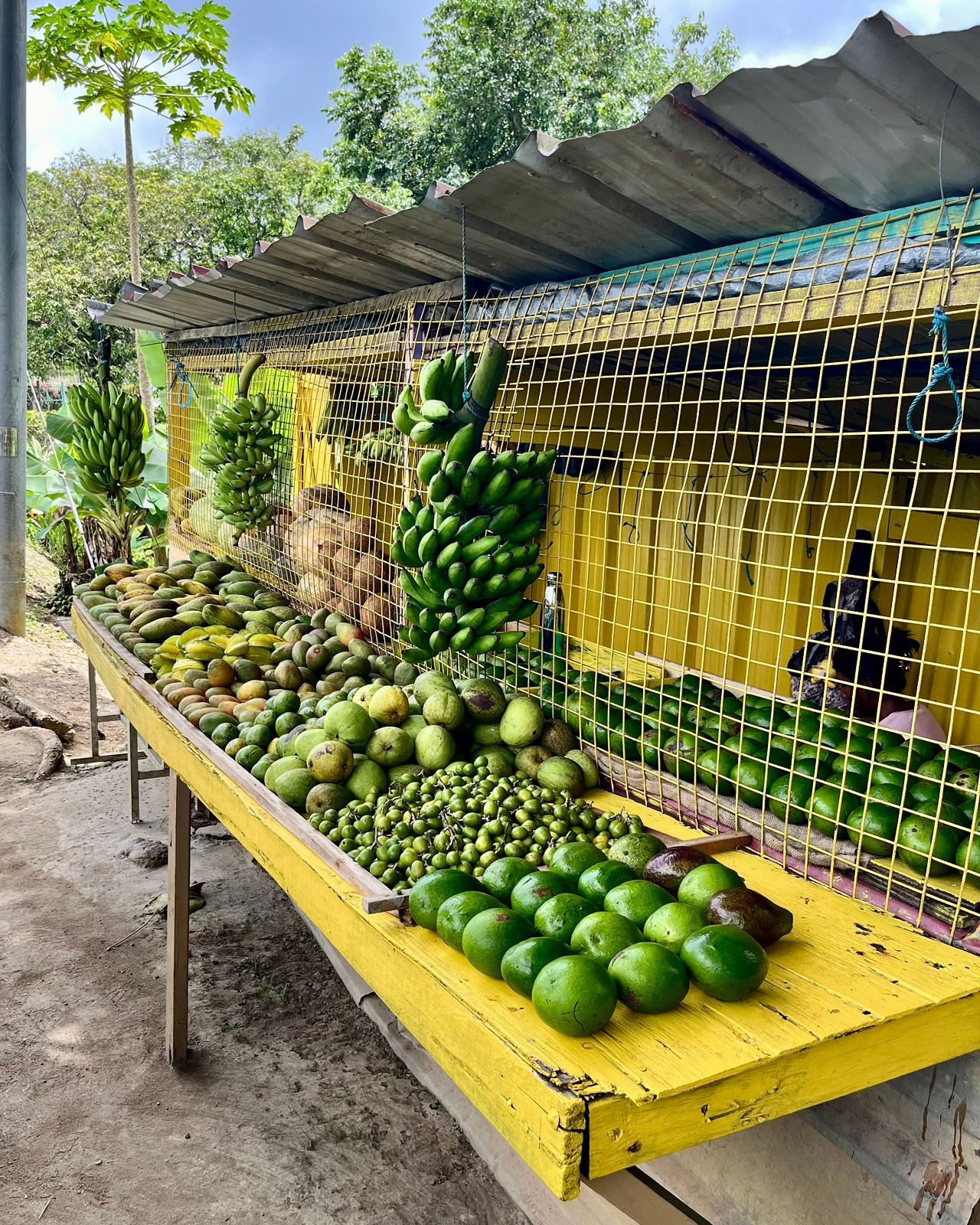
This plays out constantly in ways we recognise. During a hurricane warning, the price of water and canned goods effectively rises because demand spikes and supply stays fixed. When a bumper harvest of fruit and vegetables hits the markets, the price falls because supply is plentiful. When oil prices rise globally, it eventually shows up in everything from fuel costs to the price of imported goods, because transport and production costs are embedded in almost everything we consume.
The last time the price of something you buy every week jumped, was it more people wanting it, or less of it to go around?
The Role of the Government
In most economies, including ours, the government plays a significant role in shaping economic conditions. It does this through two main tools.
The first is fiscal policy, which is essentially decisions about spending and taxation. When the government spends heavily on infrastructure or social programmes, it injects money into the economy, which stimulates activity. When it raises taxes, it pulls money out, which can slow things down. The annual national budget, presented each year, is the government’s main statement of its fiscal intentions.
The second is monetary policy, which here is managed by the Central Bank of Trinidad and Tobago (CBTT). The Central Bank sets its policy interest rate, the repo rate and manages the money supply. When it wants to encourage borrowing and spending, it keeps interest rates low. When it wants to cool an overheating economy or manage inflation, it raises them. The rates that commercial banks offer on loans and savings accounts are directly influenced by the Central Bank’s decisions.
Hold onto both tools. The energy section shows where much of the government’s money comes from. The section on interest rates puts the Central Bank’s decisions into dollars.


The Energy Sector: The Engine That Runs Almost Everything
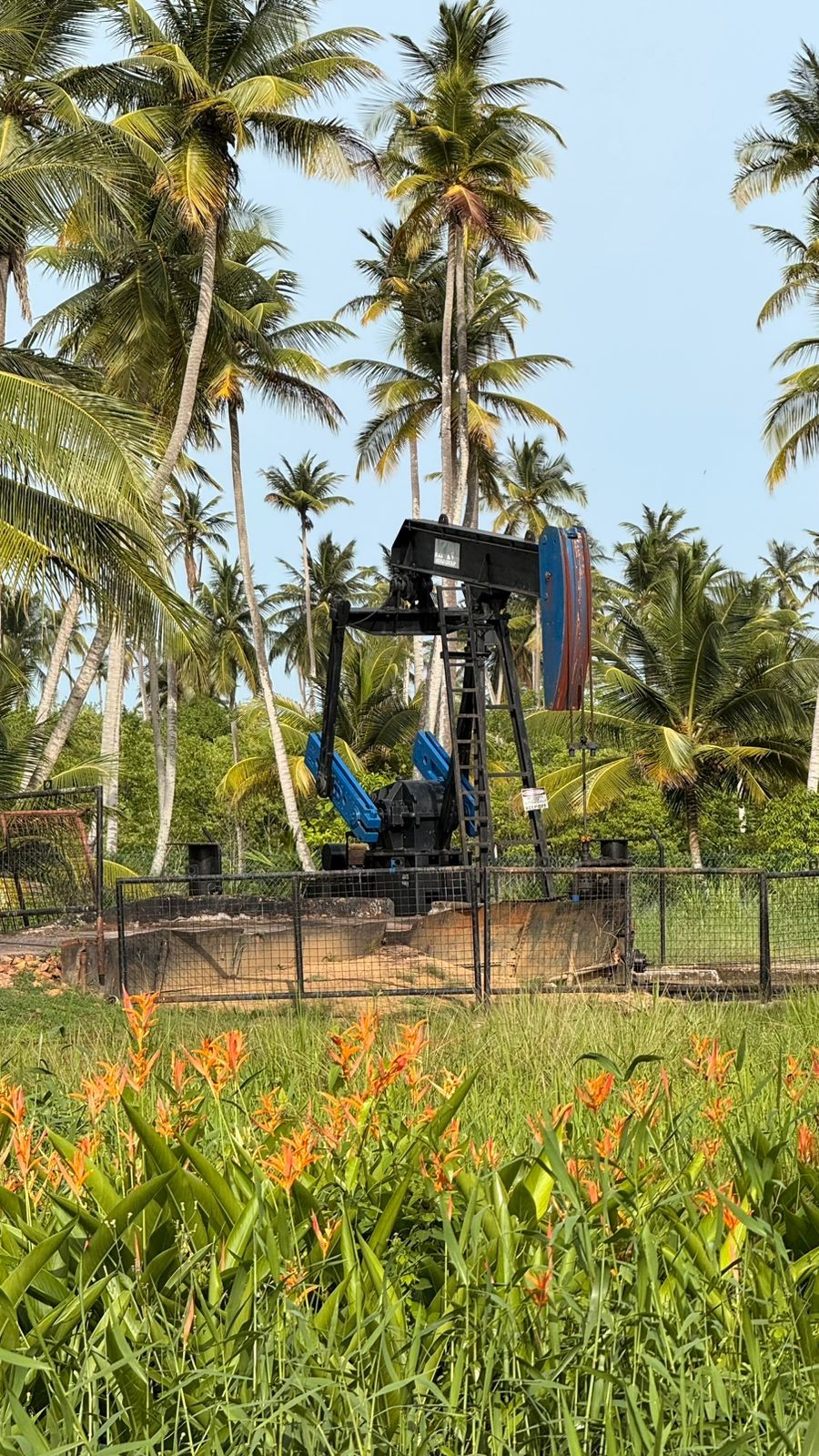
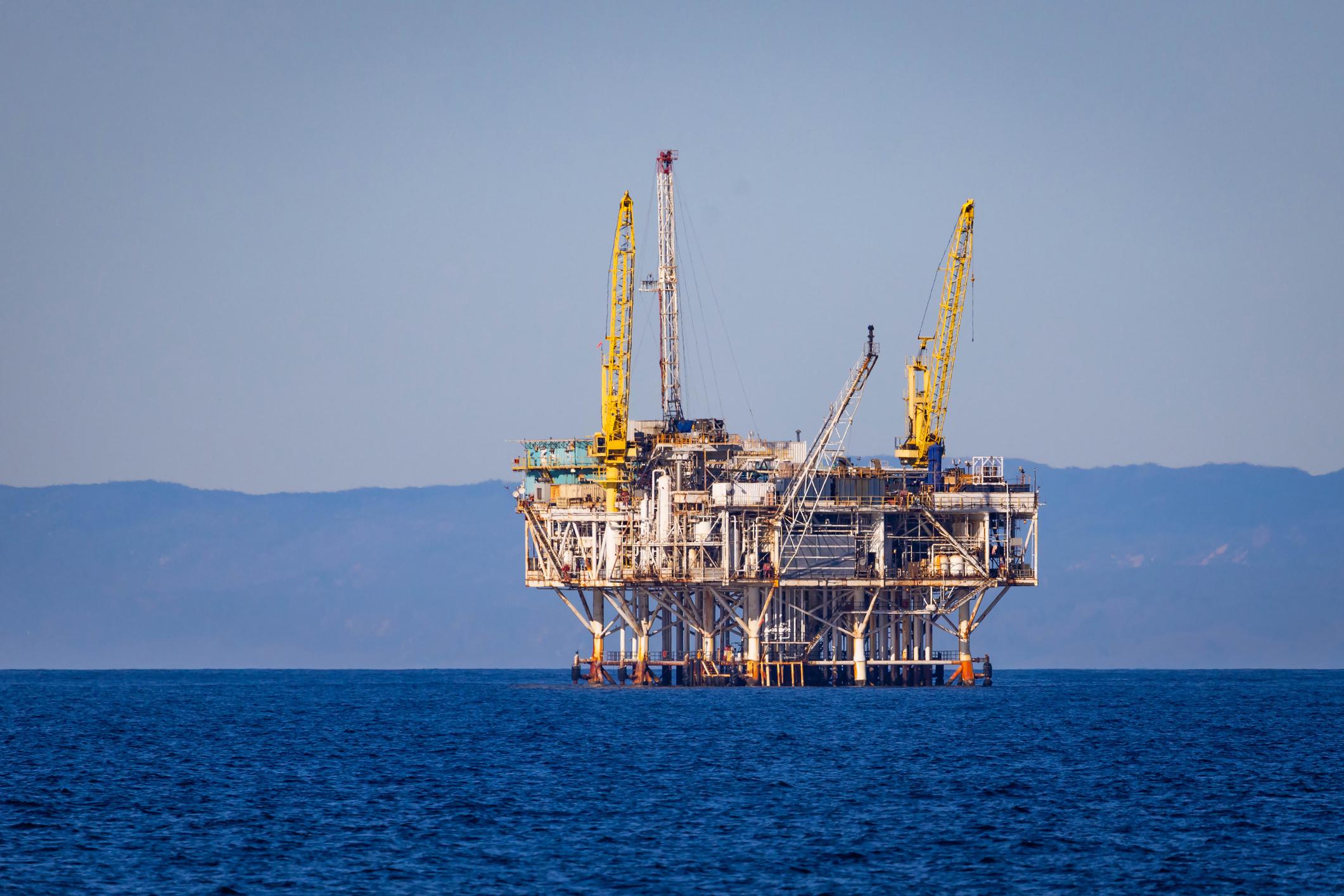
That is where the T&T story gets more complicated. T&T’s economy runs on oil and gas. The energy sector was an estimated 20.9 per cent of GDP in 2025, but it supplies about three-quarters of the foreign exchange that comes into the country, according to the IMF. Source: IMF, via Trinidad Guardian · 2026 When oil and gas prices are high and production is strong, the government collects more revenue, public sector wages get paid, social services are funded, and the broader economy feels it. When energy revenues fall, everything tightens.
This matters to you personally even if you have never worked a day in the energy sector. In fiscal 2026, energy brought in $17.1 billion (about US$2.5 billion) of the government’s $54.2 billion in revenue close to a third (Ambition calculation). Source: Ministry of Finance · 2026 That money funds the public service, infrastructure, education and subsidies. A shortfall in energy revenue ripples through every part of the economy.
Here is a number that illustrates the dependency clearly: in the first quarter of 2025, 12,800 of the 558,900 people with jobs in T&T worked in petroleum and gas, about 2 per cent (Ambition calculation). Source: CSO, via Trinidad Guardian · 2026 Two per cent of workers. Three-quarters of the foreign exchange.
Two per cent of workers. Three-quarters of the foreign exchange.
Hold onto that imbalance. Almost every major financial and policy decision the country makes traces back to it.
The Non-Energy Economy: Where Most of Us Actually Work
Outside of energy, the economy is made up of the sectors that employ the other 98 per cent of working Trinbagonians. Distribution and retail, finance and banking, construction, government services, manufacturing, food and beverage, hospitality, healthcare, education, professional services. Together they produce close to four-fifths of GDP.
The biggest single piece is Trade and Repairs, wholesale and retail distribution which the Ministry of Finance identifies as the largest contributor to GDP. Source: Ministry of Finance · 2024 Other contributors are supermarkets, hardware stores, car dealers and mini-marts. Does your salary run through this part of the economy?
The two halves do not always move together. In 2024, real GDP grew 2.5 per cent, the fastest since 2014 with energy edging up 0.4 per cent. In 2025 the picture flipped: output fell 0.5 per cent, and the Ministry of Finance projects a further 2.2 per cent decline in 2026, mainly from lower energy activity. Source: Ministry of Finance · 2026
The non-energy economy is less glamorous than oil and gas, and it answers to different forces: what local households, businesses and government spend, not prices set in Houston and London.


Inflation, Interest Rates, and Why They Affect Your Wallet


Two things the Central Bank manages that touch your life directly are inflation and interest rates.
Inflation is the rate at which prices rise over time. When inflation is low, your money holds its value reasonably well. When it is high, the same $100 buys you less than it did a year ago. Headline inflation was 0.6 per cent in July 2026, about $6 more for every $1,000 of spending than a year earlier. Source: CBTT · 2026
Your monthly grocery bill: $______ × 0.006 = roughly how much more the same basket cost than a year ago.
The Central Bank’s main lever is the repo rate from Section 03, the rate it charges commercial banks for overnight funding. It has been 3.50 per cent since March 2020, and the Central Bank held it there again on 30 September 2026. Source: CBTT · 2026 This rate influences what commercial banks charge when they lend money and, to a lesser extent, what they pay when you deposit money.
Here is what that looks like in dollars. Banks paid an average of 0.92 per cent on deposits in June 2026, about $92 a year on $10,000. They charged an average of 6.90 per cent on loans, about $6,900 a year on $100,000. Source: CBTT · 2026 Where is your money sitting right now, and what is it earning?
The Heritage and Stabilisation Fund: T&T's Financial Cushion
One thing T&T built from its energy years is a sovereign wealth fund. The Heritage and Stabilisation Fund was established in 2007 to save a portion of energy revenues for the future and to act as a buffer when oil and gas revenues fall short of what the government needs. Source: IFSWF · 2026
At September 30, 2026, the HSF held US$6.45 billion, about $43.7 billion, or roughly a quarter of a year’s GDP, sitting outside the budget (Ambition calculation). Two withdrawals, in November 2025 and August 2026, took out US$379.6 million. Source: Ministry of Finance · 2026
The HSF matters to you because it affects how much room the government has to spend during tough times without cutting services dramatically or raising taxes sharply. It is also what saving looks like at a national level. The same logic applies personally: money set aside when times are good is what gives you options when times are not. Ambition’s emergency fund guide works through the personal version in dollars.

Where You Actually Fit In

The economy is not something that happens to you. You are a participant in it, and the choices you make count, both for your own financial position and collectively.
Your salary connects to the economy through one of three channels. Public sector workers earn based on negotiated scales that are ultimately funded by government revenue, which is itself tied to energy prices. Private sector workers in distribution, retail, and services earn based on what businesses can afford to pay, which is tied to how much consumers are spending. And everyone’s savings and loans are priced off the repo rate. Which side of your own balance sheet that rate works on, what you own or what you owe is the subject of the assets and liabilities guide.
Which channel does your income run through and what has that part of the economy done over the last two years?
Knowing this will not tell you the future. It tells you which headlines are about your money.
The economy is not a mystery. It is the sum of everyone’s decisions, including yours.
From Ambition · Free Tool
Personal Financial Health Scorecard
A 12-question assessment producing a financial health rating and the areas to review first · any currency
Five Numbers That Tell You Where Things Stand
You do not need to read every economic report. Five numbers carry most of the story, and each one is published on a fixed schedule.
| Number | Latest | What it tells you | Published by |
|---|---|---|---|
| Real GDP growth | −0.5% (2025) | How much the whole economy grew or shrank | Ministry of Finance · CSO |
| Repo rate | 3.50% (Sept 2026) | The starting price of borrowing | CBTT |
| Headline inflation | 0.6% (July 2026) | How fast your money loses buying power | CSO · CBTT |
| Unemployment | 5.4% (Q1 2026) | Where the job market has been | CSO · CBTT |
| HSF net asset value | US$6.45B (Sept 2026) | The size of the national cushion | Ministry of Finance |
Source: Ministry of Finance · CSO · CBTT · 2026
Unemployment is a lagging indicator. It rises after the economy has already weakened and falls after it has already recovered. At 5.4 per cent in the first quarter of 2026, up from 4.9 per cent a year earlier, it tells you where the labour market has been more than where it is going. Source: CBTT · 2026
The foreign exchange situation sits on its own. T&T’s access to US dollars affects import costs, business operations and the price of what is on the supermarket shelf. Gross official reserves stood at US$5.29 billion at the end of August 2026 i.e. 6.1 months of imports. Source: Ministry of Finance · 2026
The Bottom Line — Three Points to Remember
Three points to carry away:
Two per cent of workers. Three-quarters of the foreign exchange.
That is the energy sector and the imbalance almost every policy decision traces back to. Source: CSO · 2025; IMF · 2026; Ambition calculation
The repo rate is the starting price of money.
3.50% since March 2020. At 0.92% on deposits, $10,000 in savings earns about $92 a year. Source: CBTT · 2026; Ambition calculation
The HSF is the country's emergency fund.
US$6.45 billion at September 30, 2026, saved when energy revenue ran above budget, drawn on when it fell short. Source: Ministry of Finance · 2026
your next move
One question to carry into the next headline you read: who does this benefit, and who does it put pressure on?
A few options for consideration: noting the five numbers above and checking them against the next release; looking up what your own savings account pays; or working out which of the three channels your income runs through.
Next in this series: How Credit Scores Work in Trinidad and Tobago — the economy sets the price of borrowing. Your credit record decides what you pay for it.
Every week at caribbeanambition.com, Ambition explains what is happening with your money and what it means for you. Subscribe for the weekly brief and get the next article directly in your inbox.
Subscribe free at caribbeanambition.com.
Caribbean business, finance, and wealth. Translated. Every Tuesday. Sourced data. No investment advice. Unsubscribe any time.
Frequently Asked Questions (FAQs)
How does the economy work in Trinidad and Tobago?
T&T’s economy has two halves. The energy sector supplies about three-quarters of the country’s foreign exchange and about 31.5 per cent of government revenue, while the non-energy sectors produce close to four-fifths of GDP. Government spending, and therefore public-sector pay, is closely linked to energy prices and production. Source: IMF · 2026; Ministry of Finance · 2026; Ambition calculation
How much of Trinidad and Tobago's economy is oil and gas?
Energy accounted for an estimated 20.9 per cent of GDP in 2025, down from 22.5 per cent in 2024, and supplies about three-quarters of the country’s foreign exchange. Source: IMF · 2026
What is the repo rate in Trinidad and Tobago?
The repo rate is the rate the Central Bank of Trinidad and Tobago charges commercial banks for overnight funding. It has been held at 3.50 per cent since March 2020, most recently confirmed on 30 September 2026. Source: CBTT · 2026
What is the Heritage and Stabilisation Fund?
The HSF is the country’s sovereign wealth fund, established in 2007. By law, 60 per cent of oil and gas tax revenue above the budget estimate is transferred into it. Its net asset value was US$6.45 billion at September 30, 2026. Source: IFSWF · 2026; Ministry of Finance · 2026
What is the difference between fiscal and monetary policy?
Fiscal policy is the government’s decisions about spending and taxation, set out each year in the national budget. Monetary policy is managed by the Central Bank of Trinidad and Tobago, which sets the repo rate and manages the money supply; the rates commercial banks offer on loans and savings are influenced by its decisions.
SOURCES
| CBTT · 2026 | Central Bank of Trinidad and Tobago. Monetary Policy Announcement (September 30, 2026): repo rate held at 3.50%; headline inflation 0.6% (July 2026); unemployment 5.4% (first quarter of 2026; 4.9% a year earlier). Economic DataPack (September 2026): average deposit rate 0.92% and loan rate 6.90% (June 2026). https://www.central-bank.org.tt/monetary-policy-announcement-central-bank-maintains-repo-rate-at-3-5-per-cent/ https://www.central-bank.org.tt/wp-content/ |
| CSO · 2025 | Central Statistical Office, Labour Force Survey, first quarter of 2025: 12,800 employed in petroleum and gas of 558,900 employed. CSO bulletins are published on the national open-data portal. https://data.gov.tt/dataset/ |
| IFSWF · 2026 | International Forum of Sovereign Wealth Funds, member profile of the Heritage and Stabilization Fund: established by Act 6 of 2007; 60% of oil and gas tax revenue above the budget estimate transferred; foreign-currency assets only. https://www.ifswf.org/member-profiles/ |
| IMF · 2026 | IMF 2026 Article IV consultation (May 2026), as reported by the Trinidad Guardian, “IMF's 2026 outlook for T&T's energy sector”: energy 22.5% of GDP (2024), an estimated 20.9% (2025); about 75% of foreign exchange supply. https://www.guardian.co.tt/business/ |
| IMF, via LatinNews · 2026 | IMF data reported by LatinNews, “Guyana/Trinidad & Tobago: Facing up to a reversal of fortunes” (May 2026): T&T GDP US$25.93 billion and US$18,070 a person (2025); Guyana US$27.1 billion (2025); 2010: T&T US$22.52 billion, Guyana US$2.89 billion. https://www.latinnews.com/component/ |
| Ministry of Finance · 2026 | Review of the Economy 2026 (October 2026): real GDP −0.5% (2025), projected −2.2% (2026); energy revenue TT$17,103.5m of total revenue and grants TT$54,247.1m (fiscal 2026); HSF net asset value US$6,450.4m at September 30, 2026; withdrawals US$379.6m (November 2025, August 2026); TT$6.7786 per US$ (July 2026); gross official reserves US$5,293.1m, 6.1 months of imports (end-August 2026). Key Economic Indicators (January 2026): real GDP +2.5% (2024), highest since 2014; energy sector +0.4%. Both are listed on the Ministry's publications page. https://www.finance.gov.tt/category/ |
| Ministry of Finance · 2024 | Review of the Economy 2023: Trade and Repairs the largest contributor to GDP. https://data.gov.tt/dataset/ |
| Ambition calculation | Energy's share of jobs and of revenue; the non-energy share of output; the 2010 size comparison; inflation per $1,000; deposit and loan interest; the HSF in dollars and as a share of GDP; US$ equivalents. Method and assumptions: “How Ambition calculated these figures”, Section 07. |
From Ambition · Courses & Tools
Take Control of Your Money
The foundation every financial decision rests on
See the course →Read more...

What a TT$10,000 Emergency Fund Looks Like on Any Salary
What a TT$10,000 emergency fund in Trinidad and Tobago covers, where it can sit, what it earns, and how long it takes at TT$300 to TT$2,000 a month.

Assets vs Liabilities: The Framework Behind Every Money Decision
What assets and liabilities mean, where a car or a home fit, and how net worth is worked out, with current T&T rates shown per $1,000.

Wealth Is What You Don’t Spend
Wealth is the gap between what you earn and what you keep. The salary trap, credit and net worth, worked through with current T&T figures.
This article is published by Ambition for informational and educational purposes only. It does not constitute financial, investment, or legal advice. Ambition reports facts, explains their meaning, and provides sourced context, it does not predict outcomes or recommend actions. Readers should consult licensed professionals before making any financial decisions. All statistics carry inline source attribution; readers are encouraged to verify primary sources independently.